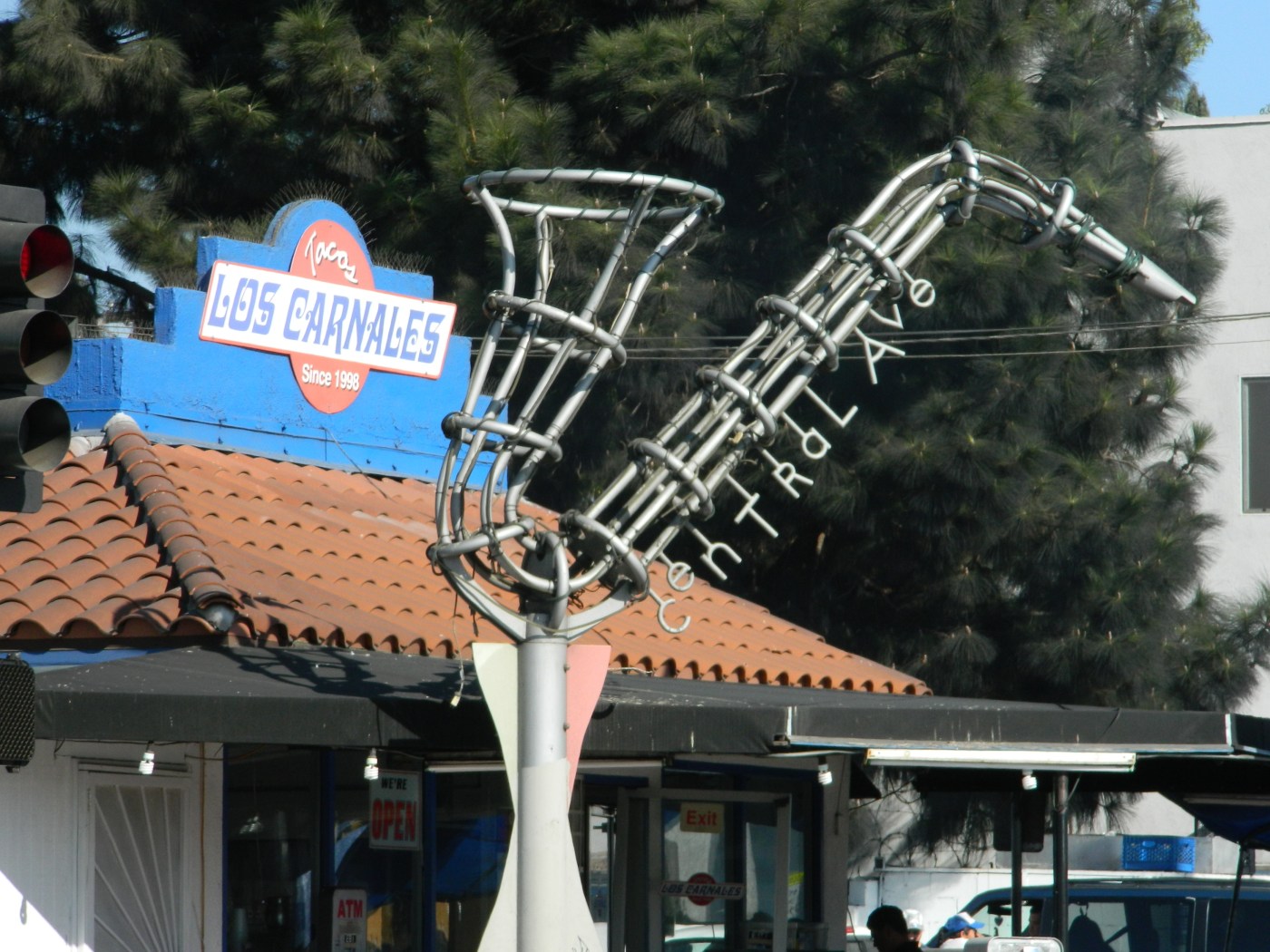
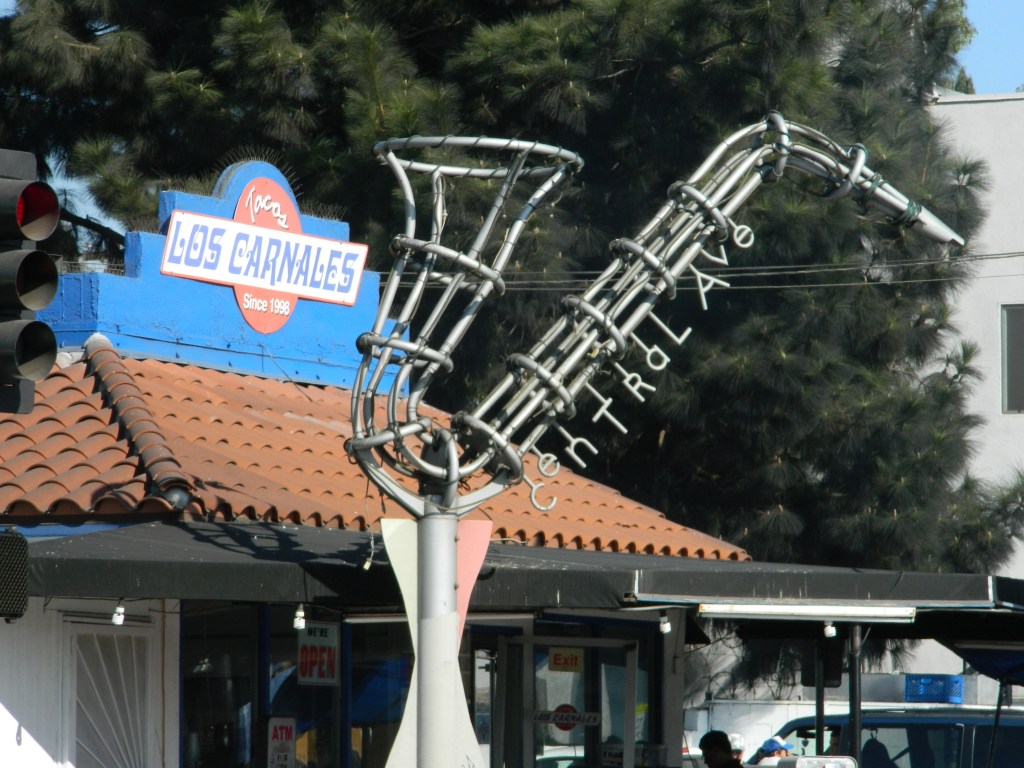
Saxophone Statue on Central Ave and Vernon in Historic South Central Los Angeles
The South Central Corridor is a crucial site I return to when I think about how music and geography intersect. Growing up in South Central Los Angeles, specially Low Bottoms, my mom would always take me to WIC on Central Ave and Vernon Ave. As an elementary school kid, I constantly questioned what I was seeing: Why is there a saxophone and a guitar on the corners of these blocks? Why is there so many Black folks in the stores that speak or understand Spanish? At the time, these questions were never fully answered because living in South Central was about surviving. My mom was always working, and my grandparents became my primary caretakers. Then in 6th grade I moved to Norwalk and that is where I began to reflect on those experiences and what they meant.
After moving to a new community, I was constantly missing South Central. The sounds of my neighbors blasting music in the mornings, alongside the presence of my grandparents and elementary school friends, formed a soundscape that defined South Central as both home and a site of Black and Brown cultural convergence. However, one thing that always made me feel connected to this community was through music. I was listening to jazz, banda, corridos, reggaeton, hip-hop and rap, more specifically, Jenni Rivera, Tupac, Chalino Sanchez, Jhene Aiko, Don Omar to name a few. This was my first encounter of what I now define as feminist sonic geographies but at that time, I did not yet have the language of higher education to name it.
Feminist sonic geographies are practices of listening that attend to the intimate, the overlooked, and the affective. It is where sound becomes a way of mapping space through memory, embodiment, and feeling. Feminist sonic geographies understand that music can transport listeners across space, that allows them to inhabit multiple places at once. For example: When I listen to jazz, rap, banda etc. outside of South Central Los Angeles, I am still sonically rooted there. The basslines, flows, and textures become a form of spatial connection that recreates a sense of home even when I am physically elsewhere. In this way, listening becomes a feminist practice: it values the personal, the emotional, and the everyday as legitimate ways of knowing and experiencing place.
Few years later later, I began my undergraduate studies at Cal State Fullerton and learn about the historic South Central jazz scene known as The Harlem of the West. This was the epicenter of African-American culture, music, and jazz hub during the 1920s to the 1950s. Although during undergrad, I was not formally introduced to sound studies until my master’s program, my undergraduate experiences grounded me in thinking about racial geographies and engaged in scholars such as Laura Pulido, Gaye Theresa Johnson, Abigail Rosas to name a few. Through this work, I came to understand racial geographies as the study of how race, class, gender and space interact to shape landscapes, communities, and power structures. This framework became crucial for me to understanding how racial inequalities become embedded within the built environment.
A few years later, I started my masters program at Cal State LA where I was introduced to sound studies. During this time, I read Yessica Hernandez Garcia’s article on Jenni Rivera where she explores how Rivera’s music and fandom produced what she defines as “sonic identities.” This period also coincided with my introduction to the rave scene, both underground spaces and large scale festivals. Throughout my master’s program, I attended countless events and encountered DJs ranging from local electors to internationally recognized artists. My writing at the time focused on preserving the underground: how to keep it from mainstream co-optation, the dynamics of nightlife in California’s underground scenes, and the emergence of runways within the underground LA rave scene. However, as I continue to engage in these spaces, I began to notice shifts. The underground was changing. I gradually stopped attending those events and instead found myself going to shows at nightclubs and newer venues in LA, particularly those produced by Framework and Insomniac Events.
As I finish my second year of my PhD, my primary sources have shifted from physical spaces such as warehouses and clubs to DJs themselves. My research examines how HoneyLuv and The Martinez Brothers produce feminist sonic geographies through their music selection. Their sets move across the Midwest, East Coast, West Coast, the South, the Caribbean, Europe and beyond which allows us to travel to these regions without ever leaving the dancefloor. They do so by incorporating soul, hip-hop elements, latin and Caribbean rhythms, and disco into their sets, creating layered sonic lineages that map multiple geographies at once. I use “feminist” to describe a mode of listening and performance that is attentive, relational, and embodied. These DJs read the crowd in real time that responds to movement, energy, and feeling and make decisions based on what the audience is dancing to. In this way, the dancefloor becomes a dynamic space where sound, body, and geography are constantly in negotiation, and where listeners can experience multiple places at once.
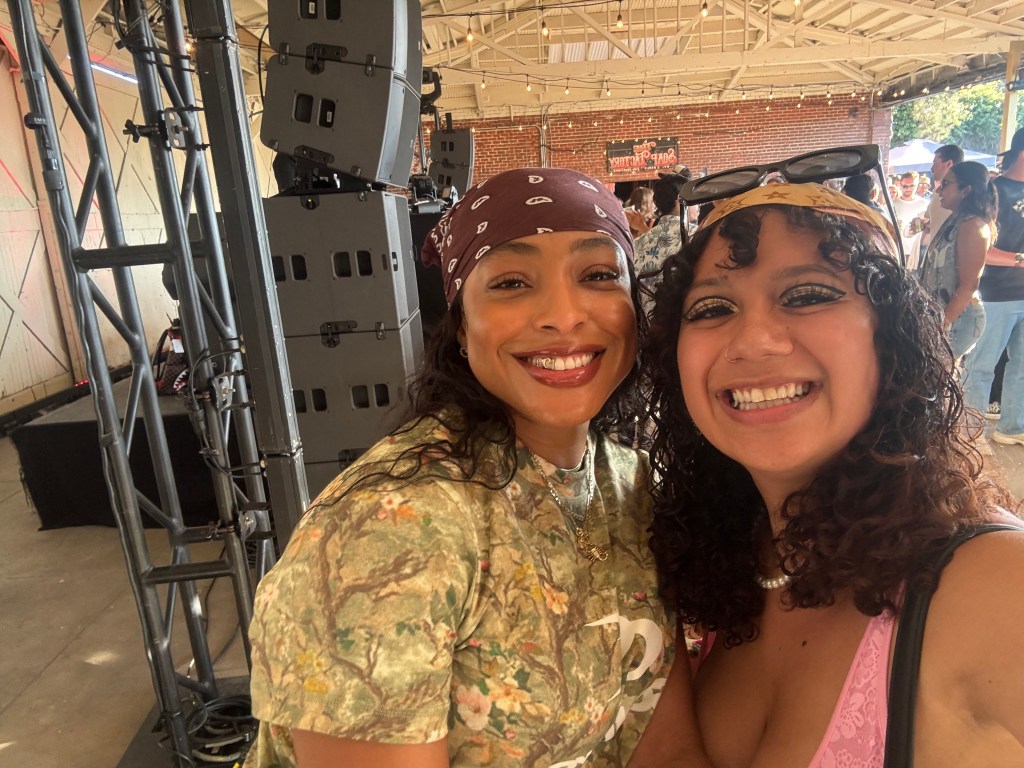

Meeting Honeyluv and The Martinez Brothers for the first time
My love for jazz and Latin music and especially the ways these sounds are sampled, remixed, or woven into house tracks continue to ground me in a sense of home. When I hear a saxophone layered over a deep baseline, or percussive rhythms that mirror Banda, salsa, or reggaeton within a set, I am immediately transported back to South Central. These sonic elements carry memory, migration, and community within them. The South Central jazz scene along with the broader South Central corridor remains a crucial site for how I think about sonic geographies. It is a space where Black and Brown musical traditions converge, where sound maps histories of coexistence and where listening becomes a way of tracing the entanglements of race, place, and cultural production across time.
 Counter-Archives from the Dancefloor
Leave a comment